
Car Crash Simulator
HyperFusion GamesRacing
4.3141.00 Reviews
- Version
- 87
- Installs
- 1.00M
- Age Rating
- Everyone
Screenshots
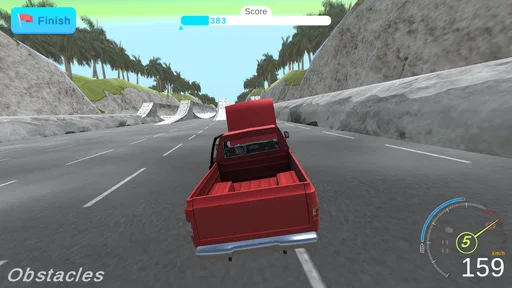
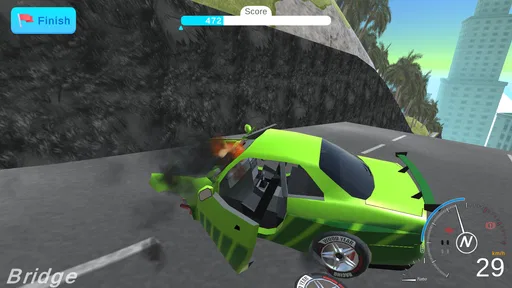
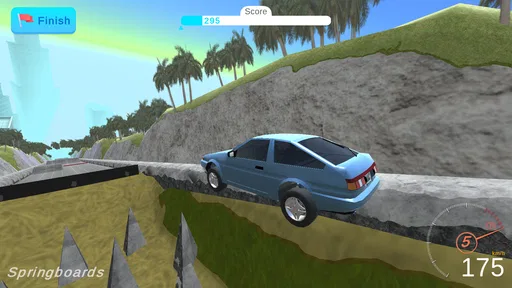
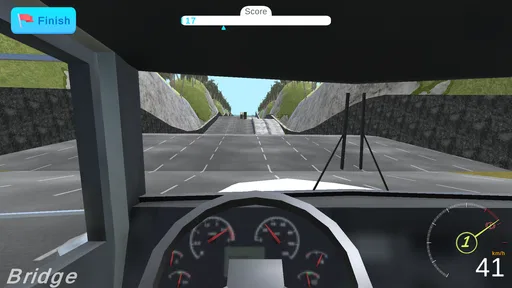
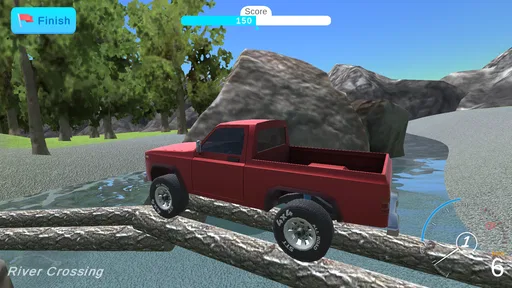
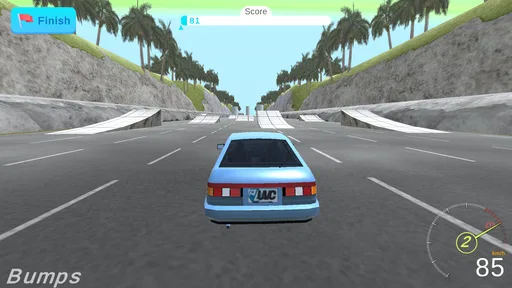
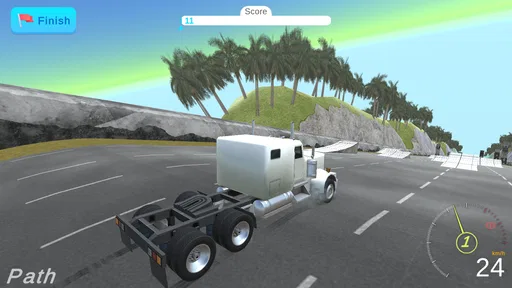
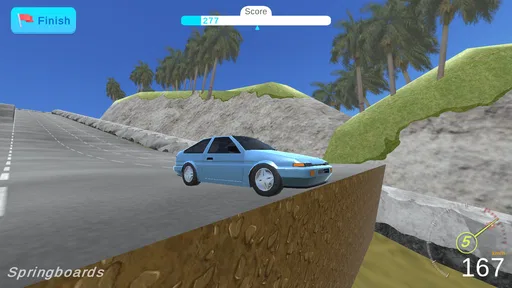
Our Review of Car Crash Simulator
 Analysis by Appyee
I went into Car Crash Simulator expecting a quick driving game built around spectacular wrecks, and that is exactly where its appeal lies. Rather than asking me to treat every race like a careful lap-time exercise, it puts the focus on taking an off-road car over rough terrain and seeing how convincingly things go wrong. The driving, the jumps, and the crash physics are the main event.
That makes this a very different kind of racing game from a traditional circuit racer. I would recommend it to someone who enjoys experimenting with vehicles, replaying a jump to improve the landing, or simply relaxing with short sessions where the result is less important than the impact. I would not point a serious competitive racer toward it first, because the attraction is destruction and physical reactions rather than a deep championship structure.
What the driving experience is really about
HyperFusion Games presents this as a free racing game for Android, with a store short description that calls it a car crash simulator. In practice, I found that description useful because it sets the right expectation: the fun comes from controlling an off-road car through difficult situations and watching the vehicle respond when a landing, collision, or climb does not go as planned.
The off-road setting gives the driving a more playful rhythm than a smooth road racer. Uneven ground changes the way I approach speed. A jump is not automatically successful just because I have enough momentum; the angle of the car and the timing of the landing matter just as much. That creates a small but satisfying decision before each obstacle: commit to the run, slow down for control, or accept that the attempt may end in a crash.
I especially like that the crash is not merely a failure screen in the concept of the game. It is part of the entertainment. A bad landing can become more interesting than a clean one because it gives me something to study and try again. That makes the game suitable for short breaks. I can play for a few minutes, test one approach, and stop without feeling that I have abandoned a long race.
The most useful way to play is to treat each attempt as a small experiment. Instead of holding the accelerator and hoping the car survives, I try to identify what caused the failure. Was I too fast before the rise? Did I land nose-first? Did I turn too late? This approach turns the crash physics from a visual novelty into a basic learning tool. The game becomes more rewarding when I use each wreck to adjust the next run.
Why the physics matters more than speed
Many racing games reward a simple pattern: accelerate, take the ideal line, and avoid contact. Here, that mindset can work against the main attraction. The rough terrain means that speed alone is not always progress. A slower approach can produce a cleaner landing, while a reckless burst may send the car into an entertaining but unhelpful tumble.
That trade-off is one of the more interesting parts of the experience. I found myself choosing between a safe attempt and a dramatic one depending on what I wanted from the session. If I was trying to get through an obstacle, I valued control. If I was simply testing the crash behavior, I was happy to take a risk. This flexibility gives the game more personality than a basic endless driving toy.
A practical tip is to make only one change between attempts. If I alter speed, steering, and timing at once, I cannot tell what improved the result. Changing one element makes the physics easier to read. It is a small habit, but it helps the game feel less random and gives repeated runs a purpose.
Another useful habit is to watch the landing rather than the jump itself. The launch often looks impressive, but the landing determines whether the car continues, bounces into another obstacle, or folds into a crash. I pay attention to how the vehicle meets the ground, then adjust the approach on the next run. That is more effective than simply trying to jump farther every time.
Who will enjoy it in everyday use
I can see this working well during a commute, a waiting-room break, or a few minutes at the end of the day when I want interaction without a complicated story or a long commitment. A realistic session would be opening the game after finishing a task, attempting the same rough section several times, and closing it once I have either found a better approach or enjoyed one particularly dramatic wreck.
It also suits players who like sandbox-style vehicle behavior but do not necessarily want a large open world. The appeal is concentrated: get behind the wheel, find a difficult situation, and see what the car does. That focus is helpful for casual players who might find a full racing career mode too demanding.
On the other hand, I would skip it if my priority is licensed cars, realistic motorsport rules, detailed tuning, or serious online competition. Nothing about the core premise suggests that those are the reasons to install it. Someone looking for precise lap comparisons or a structured racing league will probably be happier with a conventional circuit game.
Spending, progression, and the question of fairness
The game is free to install and is rated for Everyone, which makes it easy to try without paying at the start. It has attracted over a million installs and holds a 4.3 average from around eleven thousand ratings, so there is clear interest in this particular crash-focused approach to driving. Those figures tell me that it is not an obscure experiment, although popularity alone does not guarantee that its style will suit every player.
There are in-app purchases ranging from $0.49 to $38.99 per item. That is the main spending detail I would keep in mind before handing the phone to a child or allowing purchases on a shared device. The presence of a low entry price and a much higher individual purchase range means I would check the purchase flow carefully and use the device’s normal purchase protections.
I cannot fairly claim that paying gives a competitive advantage, removes advertising, unlocks particular vehicles, or accelerates a named progression system, because those details are not established here. My honest advice is therefore simple: treat purchases as optional until the game itself clearly explains what each item does. Do not buy merely because a button appears during a frustrating attempt.
That is also the fairest way to judge progress. If I am stuck on an obstacle, I first change my driving approach rather than assuming that spending is the intended solution. The physics-focused design gives me a reason to experiment before paying. A different launch angle, a more controlled landing, or a better-timed turn may solve the problem without any purchase at all.
For families, the Everyone rating makes the game broadly approachable in terms of age classification, but that rating should not be confused with cost control. I would still enable purchase authentication and explain to younger players that the free download does not mean every optional item is free. That is a practical safeguard, not a criticism of the driving itself.
Does it feel competitive?
My view is that this is better understood as a personal challenge than a fairness-sensitive competitive racer. The interesting comparison is between my previous attempt and my next one, not necessarily between my performance and another player’s. That reduces some of the pressure normally associated with paid upgrades, because the satisfaction comes from learning the terrain and controlling the crash.
Still, players who want a strict competitive environment should be cautious. Any racing game with optional purchases raises a natural question about whether spending affects performance, but the confirmed purchase range alone does not answer that question. I would not label the game pay-to-win, and I would not promise the opposite. The responsible conclusion is that competitive fairness should be judged from the actual function of each purchase inside the game, not from the existence of purchases by itself.
If a friend asked me whether to spend money, I would say to play long enough to decide whether the crash model is genuinely fun first. A purchase makes more sense when it supports a type of play I already enjoy. It makes much less sense as a reaction to impatience, a difficult section, or the assumption that a larger item must be necessary.
What the current version tells me
The current version is 87, and the game supports Android 7.0 or later. That makes it accessible to people using a wide range of Android devices, including phones that are not recent flagships. Even so, compatibility is not the same as identical performance. Physics-heavy scenes, multiple impacts, or long sessions can feel different depending on the phone, so I would judge smoothness on the device I actually plan to use rather than assuming every handset will behave the same way.
The release date was December 24, 2023, which places the game in a relatively recent generation of mobile titles rather than an old classic being rediscovered. The version number and continued presence in the store suggest an actively maintained product, but they do not tell me exactly which systems have changed over time. I would avoid treating the version number as proof of a particular feature or support promise.
This is one reason I appreciate approaching the game through its confirmed identity instead of imagined extras. It is a free off-road crash-focused racer from HyperFusion Games, aimed at broad audiences, with optional purchases. That is enough to decide whether the central idea appeals to me. I do not need to invent a career mode, multiplayer ranking, customization system, or advanced control option to make the review sound more exciting.
The limitations I would consider first
The biggest limitation is also the game’s defining choice: crashes are the attraction. If I want clean racing lines, careful overtaking, and the satisfaction of completing a polished lap, repeated wrecks may become tiring rather than entertaining. The experience depends heavily on whether I enjoy trying the same kind of physical challenge more than once.
A second limitation is that the store-facing identity is quite narrow. The game clearly communicates off-road driving and crash physics, but that does not automatically make it a complete replacement for a larger racing title. Players who want a broad collection of racing disciplines should see this as a focused side game, not as their only driving game.
There is also a potential patience issue. Physics-based attempts can feel unpredictable when I do not yet understand how the car reacts to a slope or landing. The solution is to slow down and observe, but players who dislike trial and error may interpret that learning process as inconsistency. I would recommend it more strongly to people who enjoy testing possibilities than to people who want immediate, perfectly repeatable control.
Finally, optional purchases create a point of friction even when I intend to spend nothing. I prefer games where the cost boundaries are obvious before I become invested. Here, I would keep an eye on every purchase prompt and make a deliberate decision rather than tapping through quickly. That does not ruin the free experience, but it does mean the game deserves a little financial awareness.
My verdict after weighing the fun against the friction
Car Crash Simulator works best when I stop judging it like a conventional racing championship. Its strongest quality is the way it turns off-road driving into a series of physical questions: how much speed is enough, how should I meet the slope, and what happens if I deliberately push beyond control? The advanced crash-physics angle gives each failed attempt a reason to exist, provided I enjoy learning through repetition.
I would recommend it to casual Android players who want a free, easy-to-understand driving game, especially those who enjoy vehicle experiments and short sessions. It is also a reasonable choice for someone who wants to see whether a crash-focused racer can hold attention without the complexity of a full simulation. The Everyone rating makes it broadly approachable, while the free entry point makes trying it less of a commitment.
I would steer serious racers elsewhere if their priorities are organized competition, precise motorsport simulation, or a clearly defined progression path. I would also advise cautious spending. With individual in-app purchases reaching $38.99, I would play first, understand what an item actually changes, and use purchase controls on any shared device. The available facts support discussing the price range, but not declaring that purchases are either essential or unfair.
For me, the final decision comes down to the kind of satisfaction I want. If I want to finish a race cleanly, this may feel too focused on destruction. If I want to attempt a difficult off-road section, learn from a bad landing, and enjoy the spectacle when the car reacts dramatically, it has a clear purpose. This is a crash-and-experiment game first, and a traditional racer second.
That honest distinction is why I would recommend giving it a try rather than promising that it will replace every other driving game. Start without spending, use each crash to change one part of your approach, and decide whether the physics remain enjoyable after the novelty of the first wrecks fades. If they do, HyperFusion Games has made a focused casual racer that can earn a regular place in a mobile gaming rotation.
Verdict
Strengths of Car Crash Simulator
- Realistic crash physics make each collision feel varied and entertaining.
- Multiple vehicles offer different handling styles and crash outcomes.
- Simple controls make it easy to start playing without a long tutorial.
- Offline play is convenient for quick sessions without an internet connection.
- Damage effects add visual feedback and make impacts feel more satisfying.
Limitations of Car Crash Simulator
- Repeated crashes can become monotonous after extended play sessions.
- Some vehicles or features may require in-app purchases to unlock.
- Graphics may look dated on newer phones and tablets.
- Ads can interrupt gameplay, especially between short challenges.
- Physics occasionally behave unpredictably after severe collisions.
Other Releases by HyperFusion Games
View All
Stranger School: Prank Games
Simulation4.6
Similar Picks in This Category
View All
Hill Climb Racing
Fingersoft4.3

Dr. Driving
SUD Inc.4.2

Traffic Rider
skgames4.5

Asphalt 8 - Car Racing Game
Gameloft SE4.6

Race Master 3D: Car Racing
Beresnev Games4.6

Extreme Car Driving Simulator
AxesInMotion Racing4.3
Frequently Asked Questions
What is Car Crash Simulator and how does the gameplay work?
Car Crash Simulator is a driving and physics-based game focused on realistic vehicle collisions, destruction, and crash testing rather than traditional racing. After choosing a vehicle and environment, you can drive into barriers, ramps, traffic objects, or other obstacles to observe the impact. The main appeal is experimenting with crashes, vehicle damage, and different driving situations at your own pace.
Does Car Crash Simulator require an internet connection to play?
Car Crash Simulator may offer offline gameplay for its main driving and crash-testing features, which is convenient when you are traveling or have limited data access. However, some versions can require an internet connection for advertisements, updates, online features, analytics, or downloading additional content. Availability may also differ between Android and iOS, so checking the store description before installation is recommended.
Is Car Crash Simulator suitable for children?
The game is generally designed around vehicle accidents, destruction, and simulated crashes, so it may not be suitable for very young children or players who dislike intense collision effects. It normally does not focus on graphic human injury, but the presentation can still include loud sounds, damaged vehicles, and repeated impact scenes. Parents should review the age rating, advertising, and in-app purchase information before allowing children to play.
Does Car Crash Simulator include different cars, maps, and customization options?
The available selection depends on the specific version of Car Crash Simulator, but the game typically provides multiple vehicles, crash environments, ramps, obstacles, and driving scenarios. Some editions may also include vehicle upgrades, color changes, camera perspectives, or unlockable content. Certain cars or locations can be restricted behind progression, advertisements, or purchases, so the free download may not provide immediate access to every feature.
Will Car Crash Simulator run smoothly on my Android or iPhone?
Performance depends on your device’s processor, available memory, operating system, and the game version installed. Physics-heavy crash simulations can use more resources than simple driving games, particularly when several vehicles or detailed environments appear at once. Newer phones and tablets should generally provide a smoother experience, while older devices may show reduced frame rates, longer loading times, heat, or faster battery consumption during extended sessions.
Play our best games!


